Kieselguhr
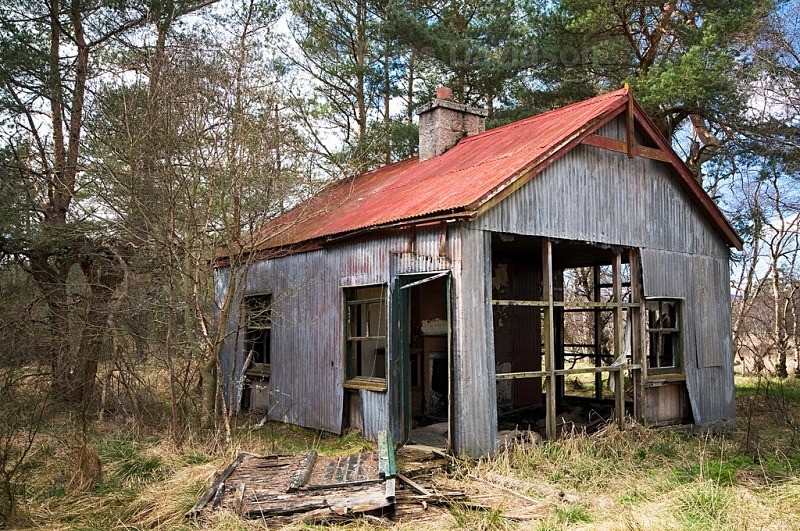
Used as an absorbent of nitroglycerin in the manufacture of dynamite. There is a particular kind of moss growing in the Black Moss which was apparently used to line trenches during the First World War. This corrugated iron house was built to house the people who harvested the moss and prepared it for shipment to France and Flanders. Its curious name looks vaguely German-like, and it may have been prisoners of war who were obliged to live and work here.
Kieselgur is the German name of a natural substance, diatomaceous earth, which is used in filtration, and which was once used in making dynamite. Deposits of so-called 'white peat' on Black Moss were worked in the 19th century. In 1885, 200 tons from each of Black Moss and Ordie Moss nearby were extracted. Six tons of 'white peat' yielded one ton of Kieselgur when dried and it was used in the manufacture of dynamite, paint and other commodities. Diatomite was extracted until the end of WW1. There are still substantial deposits left, but the area is now part of the Muir of Dinnet National Nature Reserve, and the only market for it now is cat litter! (Thanks to Dr Peter Craig for a copy of his article on the subject.)
Kieselgur is the German name of a natural substance, diatomaceous earth, which is used in filtration, and which was once used in making dynamite. Deposits of so-called 'white peat' on Black Moss were worked in the 19th century. In 1885, 200 tons from each of Black Moss and Ordie Moss nearby were extracted. Six tons of 'white peat' yielded one ton of Kieselgur when dried and it was used in the manufacture of dynamite, paint and other commodities. Diatomite was extracted until the end of WW1. There are still substantial deposits left, but the area is now part of the Muir of Dinnet National Nature Reserve, and the only market for it now is cat litter! (Thanks to Dr Peter Craig for a copy of his article on the subject.)